
What Does Payroll Involve for a Small Business?
Payroll involves calculating employee wages, withholding taxes, processing deductions, and issuing payments on a set schedule.
Payroll may also include:
- Tracking hours worked or salaries owed
- Withholding federal, state, and local taxes
- Processing benefits deductions
- Filing payroll tax reports
- Issuing pay stubs and year-end tax forms
Payroll must be processed accurately and on time, since errors can affect employees directly.
What Does Bookkeeping Involve for a Small Business?
Bookkeeping involves recording and organizing all financial transactions, including sales, expenses, and account balances.
Bookkeeping may include:
- Recording income and expenses
- Reconciling bank and credit card accounts
- Maintaining the general ledger
- Tracking accounts receivable and payable
- Producing monthly financial reports
Bookkeeping covers the full financial picture of the business, not payroll alone.
How Are Bookkeeping and Payroll Connected?
Payroll transactions must be recorded in the company’s books. Wages, payroll taxes, and benefits deductions all appear as expenses and liabilities in the bookkeeping system.
If payroll and bookkeeping records do not match, the business may see incorrect wage expenses, tax liabilities, or bank balances.
What Are the Key Differences Between Bookkeeping and Payroll?
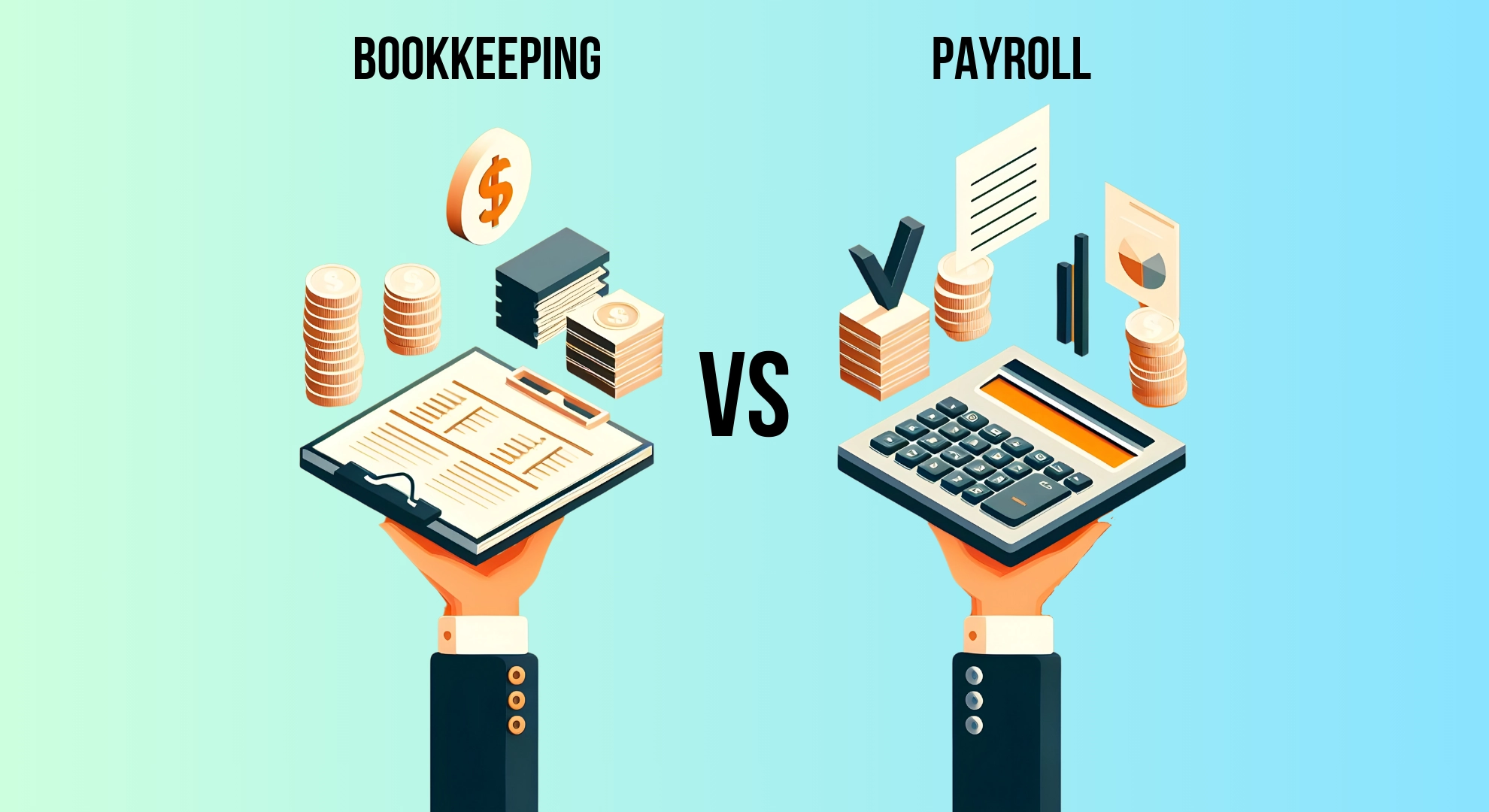
Bookkeeping covers all financial transactions across the business, while payroll focuses specifically on employee compensation.
- Bookkeeping: ongoing recordkeeping across sales, expenses, and accounts
- Payroll: scheduled processing of employee wages and related taxes
- Bookkeeping: monthly reconciliation and reporting
- Payroll: recurring pay periods, often weekly, biweekly, or monthly
- Bookkeeping: supports tax preparation and financial decisions
- Payroll: supports compliance with employment tax requirements
Why Do Payroll Errors Affect Bookkeeping Records?
Since payroll transactions flow directly into the books, an error in payroll, such as an incorrect deduction or missed tax filing, can create inaccurate expense or liability entries in the bookkeeping system.
This is one reason payroll and bookkeeping are often handled together rather than as fully separate processes.
What Payroll Records Should Match the Books?
- Gross wages paid to employees
- Payroll tax withholdings
- Employer payroll tax expenses
- Benefits deductions
- Net pay issued to employees
Reviewing these figures against the general ledger helps confirm payroll and bookkeeping records agree.
Common Mistakes When Managing Both Bookkeeping and Payroll
- Recording payroll as a single lump expense instead of separate categories
- Missing payroll tax deposits or filings
- Not reconciling payroll reports against the bank account
- Mixing owner draws with employee payroll
- Updating one system without updating the other
Should a Small Business Handle Bookkeeping and Payroll Separately or Together?
Some small businesses use separate providers for bookkeeping and payroll, while others prefer a single provider that manages both.
Using a combined service can reduce the chance of mismatched records, since the same provider records payroll transactions directly into the books.
How Number Ninjas LLC Supports Bookkeeping and Payroll Together
Number Ninjas Bookkeeping & Payroll LLC, based in Katy, Texas, supports small businesses with both bookkeeping and payroll services, along with tax preparation, HR support, and administrative assistance.
Because both services are handled together, payroll transactions can be recorded directly into the business’s books, reducing gaps between the two systems.
The firm works with businesses across industries including restaurants, boutiques, salons, HVAC and plumbing, engineering, construction, and landscaping.
What Should a Business Look for in a Combined Bookkeeping & Payroll Partner?
- Accurate and timely payroll processing
- Consistent bookkeeping and reconciliation
- Clear monthly reports covering both areas
- Secure handling of employee and financial data
- Understanding of payroll tax deadlines and requirements
Conclusion
Bookkeeping and payroll serve different purposes, but they are closely connected. Payroll processes employee compensation, while bookkeeping records the financial results across the entire business, including payroll itself.
Keeping both accurate and aligned helps avoid mismatched records, missed tax deadlines, and confusion during financial reporting.
Small business owners who want bookkeeping and payroll handled together can contact Number Ninjas LLC to discuss their needs.
Frequently Asked Questions
Is payroll part of bookkeeping?
Payroll is a separate process, but payroll transactions must be recorded within the company’s bookkeeping system.
Can one provider handle both bookkeeping and payroll?
Yes. Many small businesses use a single provider for both services to help keep records aligned.
What happens if payroll and bookkeeping records do not match?
Mismatched records can lead to incorrect wage expenses, tax liabilities, or bank balances.
How often is payroll usually processed?
Payroll is commonly processed weekly, biweekly, or monthly, depending on the business.
Does payroll affect tax preparation?
Yes. Payroll tax records and wage expenses are part of the information used during tax preparation.
Who should record payroll transactions in the books?
A bookkeeper or a combined bookkeeping and payroll provider typically records these transactions.
What industries does Number Ninjas LLC support?
The firm supports industries such as restaurants, boutiques, salons, HVAC and plumbing, engineering, construction, and landscaping.
Is payroll tax filing included with bookkeeping services?
This depends on the provider. Number Ninjas LLC offers payroll services alongside bookkeeping, tax preparation, and HR support.